Geisha vs Maiko: Key Differences in Training, Kimono, and Roles
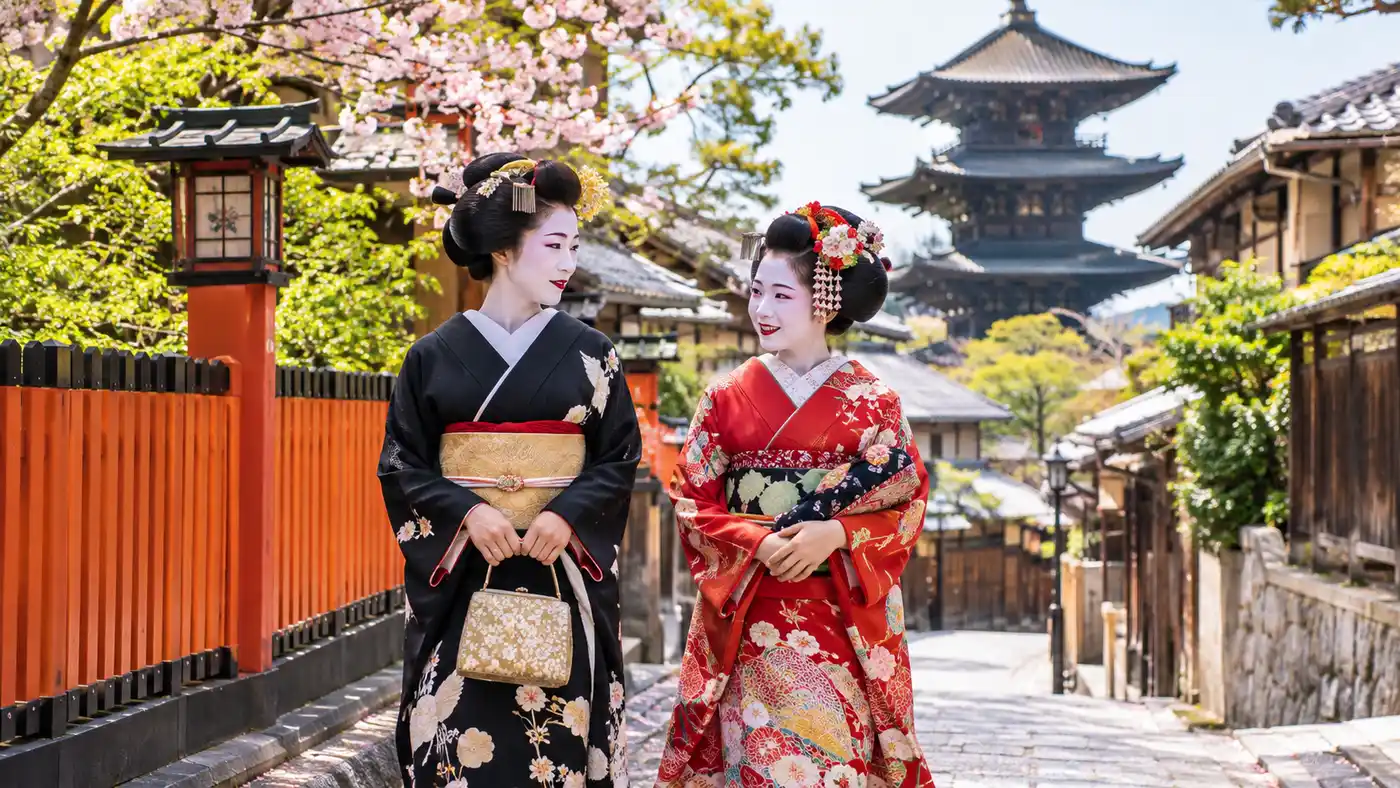
If you stand on the corner of Hanamikoji Street in Kyoto around dusk, you might catch a flash of brilliant silk slipping into a taxi. Most tourists immediately whisper the word geisha. Half the time, though, that vision of cascading floral hairpins and trailing sash belongs to an apprentice. Understanding the living world of geisha and maiko means learning to look past the white makeup to see the layered markers of age, seniority, and craft that define one of Japan's oldest surviving artistic professions.
In Kyoto, where these traditions are preserved most fiercely, a fully fledged artist is called a geiko. A maiko is her younger apprentice, literally translated as a "child of dance." Outside Kyoto, in places like Tokyo or Niigata, the vocabulary shifts slightly, but the structural apprenticeship remains largely the same. Let's walk through how to actually tell them apart, how someone becomes one, and what their day-to-day lives look like behind the closed screens of the hanamachi.
Book your geisha show kyoto experience:
What is a Maiko? The Apprentice Stage in Modern Japan
So, what is a maiko? She is a teenager who has chosen to spend her youth training in the classical Japanese arts. The journey of a maiko in Japan begins young, usually right after completing compulsory junior high school at age 15. She moves away from her family into an okiya, a dedicated lodging house run by an okami-san, or "mother." In this house, everything is shared. There is little privacy. The apprentice gives up her smartphone during initial training, adopts a distinct dialect known as Kyo-kotoba, and devotes her waking hours to the study of traditional arts.
Before she ever paints her face white or ties a silk sash, she spends anywhere from six months to a year as a shikomi. A shikomi does the chores. She sweeps tatami mats, runs errands to local teahouses, helps senior sisters dress, and observes rehearsals from the corner of the room. It sounds punishing because it is. Young women drop out during this phase all the time. The girl who perseveres eventually passes an examination in singing and dance, undergoes a brief debut period as a minarai, and finally debuts as a full japanese maiko during her misedashi ceremony.
A maiko kyoto locals see running to lessons is an entertainer-in-training, but she is also a walking spectacle of youth. Her visual presence is loud by design. In centuries past, apprentice entertainers were meant to look endearing, cute, and slightly fragile to draw protective affection from wealthy patrons. That aesthetic logic still dictates everything she wears today.
Spotting the Difference: Maiko Kimono, Hair, and Makeup vs Geisha
Telling a geisha maiko encounter apart from a senior artist comes down to a few obvious visual signals. Once you know where to look, you will never confuse them again. A maiko wears her youth on the outside. A geiko wears her experience in understated luxury.
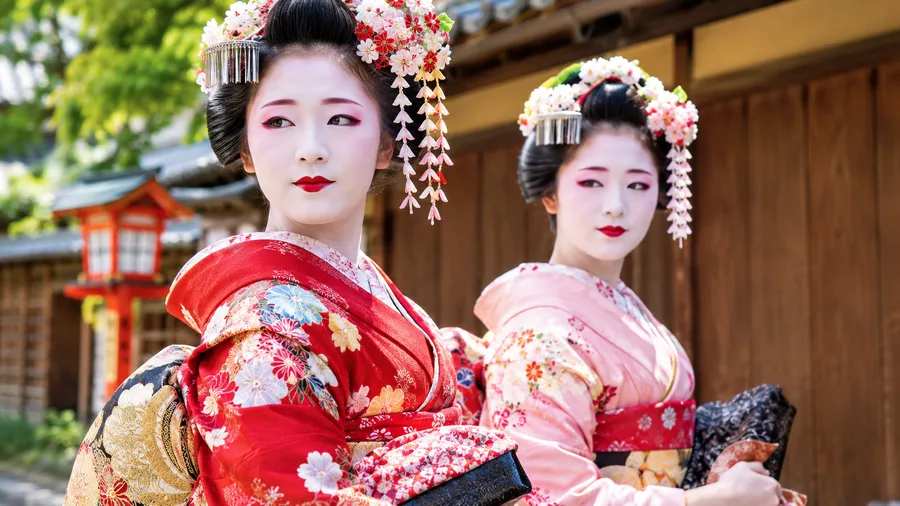
Start with the hair. A maiko always uses her real hair, styled once a week by specialized hairdressers who tug it tight into sculptural traditional arrangements like the momoware. She sleeps on a tall wooden block called a takamakura so she does not ruin the hairstyle between appointments. It can cause permanent bald spots along the hairline over time. Tucked into that hair is a seasonal kanzashi, a cluster of silk flowers that changes every single month. In April, cherry blossoms cascade down past her earlobes. In November, it is maple leaves. By contrast, a mature geiko wears a custom-fitted wig called a katsura. Her hair ornaments are simple - perhaps a tortoiseshell comb or a tiny coral pin. No flowers. No hanging dangles.
Note: If you see a woman walking around during the middle of the day in full white makeup with giant dangling hair flowers, she is almost certainly a tourist at a makeover studio. Real working maiko do not wander the streets casually at noon.
Then look at the collar. A junior maiko kimono features a collar heavily embroidered with red and gold threads. As she ages through her training, the red gives way to white embroidery. By the time she graduates to geiko status, her collar is pure, unadorned white. The sash, or obi, is another dead giveaway. The apprentice wears a darari obi that drops nearly to the floor behind her knees, measuring roughly 5.4 meters long and weighing up to 5 kilograms. A geiko wears her obi tied in the classic, compact otaiko box knot.
Footwear tells the rest of the story. Apprentices wobble along on okobo, wooden clogs carved from willow blocks that stand roughly 10 centimeters tall. Inside the hollowed wood, a tiny brass bell rings with every step to announce her presence. A full geiko wears flat, discreet zori sandals.
| Feature | Maiko (Apprentice) | Geiko / Geisha (Full Professional) |
|---|---|---|
| Hair | Real hair styled weekly; elaborate seasonal floral kanzashi | Traditional wig (katsura); quiet comb or tortoiseshell pin |
| Kimono | Long swinging sleeves (furisode); vibrant colors; tucked tucks at shoulders | Short sleeves (tomesode); subtle, solid tones; no tucks |
| Collar | Red with dense embroidery, shifting toward white over time | Solid, pristine white |
| Obi (Sash) | Darari obi hanging loosely down past the knees | Otaiko box knot tied neatly against the lower back |
| Footwear | Tall wooden okobo (approx. 10 cm) with chiming bells | Flat, quiet wooden geta or leather-soled zori |
| Typical Age | 15 to 20 or 21 | 21 to 80+ |
Makeup provides one final subtle clue. In her first year, a maiko paints only her lower lip with crimson beni. Only senior maiko and geiko paint both upper and lower lips. Geiko also abandon the full white face makeup for ordinary foundation when performing at informal daytime gatherings or once they reach an advanced age.
The Rigorous Path of Training and the Daily Schedule
People often ask me what is a maiko geisha schedule really like on an average Tuesday. It is grueling. There are no weekends in the conventional sense, though they receive two scattered rest days each month.
Morning starts around 8:00 AM. After a quick communal breakfast, the apprentice heads to the nyokoba, the specialized performing arts academy located within her district. Here, her schedule is split into precise 45-minute blocks. The focus is dance. In Gion Kobu, for instance, artists learn the refined Inoue school of dance, which takes decades to master. Lessons also cover the three-stringed shamisen, the nagauta vocal style, small hand drums (tsuzumi), the bamboo flute, and the intricacies of the tea ceremony.
To understand the depth of their culture, you only need to look at how traditions are preserved through generations. Read our deep dive on how modern geisha culture survives today to see how the district system maintains these rigorous standards despite immense modern pressures.
By 2:00 PM, she returns to the okiya. The afternoon is spent running polite greetings to neighborhood businesses, paying respects to teahouse owners, and preparing for the evening. Dressing begins around 4:00 PM. Because a maiko kimono is so heavy and the obi so rigid, she cannot dress herself. A professional male dresser, known as an otokoshi, visits the house to bind her into her silks with immense physical force.
- 08:00 AM - 12:30 PM: Arts instruction at the district academy, focusing on classical dance, shamisen, and vocal training.
- 01:00 PM - 03:30 PM: Tea ceremony study, dialect practice, and mandatory formal visits to local business patrons.
- 04:00 PM - 05:30 PM: Makeup application, hair maintenance, and binding into the evening kimono by an otokoshi.
- 06:00 PM - Midnight: Attendance at consecutive ozashiki banquets across various private teahouses.
She leaves the house at dusk and moves between appointments until midnight or later. If you are wandering through Miyagawacho or Pontocho at night, you can sometimes catch them hurrying between bookings. Many travelers wonder where to see geisha in Kyoto respectfully, and the answer is always to keep your distance and never block their path.
Book your geisha show kyoto experience:
The Evening Banquet and Performance Roles
The core of the geisha maiko geiko dynamic comes alive during the ozashiki, the traditional private dinner held in an ochaya (teahouse). These rooms are small, quiet, and screened by paper shoji. Clients pay hundreds of dollars per hour for the company of these artists, and the two roles complement each other perfectly during a banquet.
A maiko performance is visual. Because of her training level, she is the star dancer. When the music begins, she stands in the center of the tatami mats, moving through stylized, narrative choreography that expresses the seasons or famous literary scenes. Her trailing sleeves and chiming bells turn every tilt of the head into theater.
Pro tip: If you want to see a live dance without the steep teahouse admission fees, buy a ticket for the Miyako Odori or Kamogawa Odori spring dances, where maiko and geiko perform on stage together for the general public.
The geiko holds a different station in the room. She is usually the musician, seated on the floor with a shamisen or drum, providing the melodic backbone for the dance. Beyond music, the geiko is the master of conversation. While a maiko offers charming small talk and pours beer with practiced grace, a senior geiko is well-read, witty, and attuned to the subtle emotional temperature of the room. She manages the flow of the party, tells clever jokes, and ensures every guest feels valued. Without her steady hand, the room lacks cohesion.
The dynamic reminds me of jazz. The maiko is the flashy solo horn player, but the geiko is the bassist keeping everyone in pocket. Both are essential to the atmosphere.
The Transition: From Maiko to Geiko (Erikae)
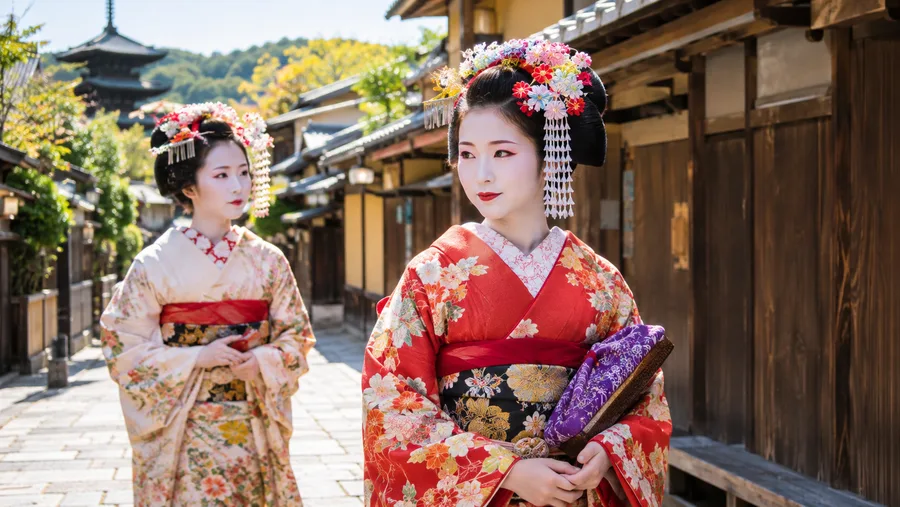
An apprenticeship does not last forever. Around age 20 or 21, after roughly five years of intense training, the maiko reaches a crossroads. She can leave the profession entirely to live an ordinary civilian life, or she can graduate to become an independent geiko. If she chooses to stay, she undergoes the erikae ceremony, which translates directly as "the turning of the collar."
Erikae marks the formal shift from apprentice to full professional. During the two weeks leading up to the ceremony, the young woman wears an extraordinary hairstyle called sakkou. On her final days as a maiko, a patron or senior teacher snips the tie binding the hair bun, symbolically cutting her ties to childhood. She puts aside the okobo, packs away the colorful long-sleeved kimono, and switches out her red embroidered neckband for the pure white silk of a geiko.
Becoming an independent geiko also carries profound practical changes:
- Financial independence: She eventually repays the debts incurred by the okiya for her costly kimonos and begins managing her own income.
- Living arrangements: She can move out of the communal okiya into her own apartment, enjoying modern privacy and owning personal electronics.
- Personal styling: She switches from natural-hair styling to a katsura wig, finally allowing her to sleep on a soft, normal pillow at night.
- Career longevity: While maiko kyoto japan culture treats apprenticeship as fleeting, a geiko can work as long as she wishes, sometimes well into her seventies or eighties.
It is worth noting that some women enter the profession later in life, particularly outside Kyoto. In Tokyo, for example, a woman debuting in her twenties skips the maiko stage entirely and begins immediately as a geisha, wearing the white collar from day one.
Frequently Asked Questions about geisha and maiko
Can a maiko get married while training?
No. Both maiko and geiko must remain unmarried to stay in the profession. If an artist chooses to marry, she must formally retire from the hanamachi, though she can return to teach arts later in life.
Are maiko only found in Kyoto?
Kyoto is the historic center and has the largest population of maiko across its five flower districts. Similar apprentices exist in a few other historic pockets like Niigata, Kanazawa, and parts of Tokyo (where they are called hangyoku), but Kyoto remains the primary home of the traditional maiko.
Why do maiko wear such tall shoes?
The tall wooden clogs, called okobo, keep the hem of the expensive trailing kimono from dragging in the dirt or mud of the street. They also force the apprentice to take tiny, delicate steps, cultivating the slow, gliding walk required in classical dance.
How much does a maiko training cost?
The okiya covers the apprentice's living expenses, lessons, and wardrobe, which can easily total over $100,000 for a five-year period. In exchange, the maiko works without a formal salary, receiving an allowance while the okiya recoups its investment through her banquet fees.
Quick Reference
- Maiko are teenage apprentices; geisha (geiko) are full professionals.
- Maiko style their real hair; geiko wear handcrafted wigs.
- Red embroidered collars signify an apprentice; solid white collars mean geiko.
- Apprentices wear tall okobo clogs; geiko wear low zori sandals.
- The transition ceremony between them is called erikae ("turning the collar").
Book your geisha show kyoto experience:
My Take
Watching a maiko navigate the stone alleys of Kyoto can feel like looking through a window into the 18th century. It is easy to romanticize the dangling silk hairpins and the slow rustle of formal kimono, but the reality behind those appearances is a grueling, blue-collar dedication to physical craft. These teenagers spend their youth memorizing obscure dance notations, mastering ancient instruments, and living under strict communal discipline while their peers are going to university or scrolling through social media. When you see a geiko and maiko working together in an ozashiki, you are not just looking at old clothes. You are watching a centuries-old master-apprentice tradition that has somehow refused to break under the weight of the modern world.
Read more about geisha show kyoto.